Hey there! As a fastener supplier, I’ve seen my fair share of different types of fasteners. One of the most common questions I get from customers is about the differences between metric and imperial fasteners. So, I thought I’d take a few minutes to break it down for you. Fastener
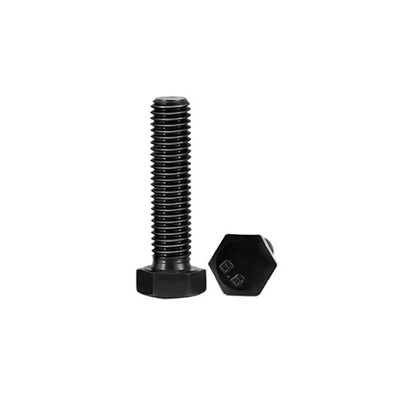
Let’s start with the basics. Metric and imperial are two different measurement systems. The metric system is used pretty much everywhere in the world except for the United States, Liberia, and Myanmar. The imperial system, on the other hand, is mainly used in the US. This difference in measurement systems has a big impact on the fasteners we manufacture and sell.
Size and Dimensions
The most obvious difference between metric and imperial fasteners is their size. Metric fasteners are measured in millimeters (mm). For example, a metric bolt might be labeled as M8 x 1.25. The "M" stands for metric, the "8" is the diameter of the bolt in millimeters, and the "1.25" is the pitch (the distance between the threads) in millimeters.
Imperial fasteners, on the other hand, are measured in inches. A common imperial bolt size might be 1/4 – 20. The "1/4" is the diameter of the bolt in inches, and the "20" is the number of threads per inch.
This difference in size can be a real headache if you’re trying to mix and match metric and imperial fasteners. You might think that a 1/4 – inch bolt is close enough to an M6 bolt (which is about 6mm in diameter), but in reality, they’re not interchangeable. The threads won’t match up, and you won’t be able to get a proper fit.
Thread Pitch
As I mentioned earlier, the thread pitch is another important difference between metric and imperial fasteners. In the metric system, the pitch is measured in millimeters. This means that the distance between each thread is a specific number of millimeters. For example, an M8 bolt with a pitch of 1.25mm will have threads that are 1.25mm apart.
In the imperial system, the pitch is measured by the number of threads per inch. So, a 1/4 – 20 bolt has 20 threads per inch. This means that the distance between each thread is 1/20th of an inch, or 0.05 inches.
The difference in thread pitch can affect how well a fastener holds things together. A finer thread pitch (more threads per inch or a smaller pitch in millimeters) generally provides a stronger hold, but it can also be more prone to stripping if you overtighten it. A coarser thread pitch (fewer threads per inch or a larger pitch in millimeters) is usually easier to install and remove, but it might not hold as tightly.
Head Styles and Drive Types
Metric and imperial fasteners also come in different head styles and drive types. Some head styles are common to both systems, like hex heads and socket heads. But there are also some differences.
For example, in the imperial system, you’ll often find slotted heads (the simple straight – line slot for a flat – head screwdriver) on smaller fasteners. In the metric system, slotted heads are less common, and you’re more likely to see Phillips or Torx drives.
The drive type is important because it determines what kind of tool you need to install or remove the fastener. If you’re used to working with imperial fasteners, you might have a set of imperial – sized wrenches and screwdrivers. But if you switch to metric fasteners, you’ll need to get a new set of metric tools.
Applications
The choice between metric and imperial fasteners often depends on the application. In industries that are more globally focused, like automotive and aerospace, metric fasteners are more commonly used. This is because most of the world uses the metric system, and it’s easier to standardize parts and components when everyone is using the same measurement system.
In the US, however, many traditional industries still rely on imperial fasteners. For example, the construction industry in the US has a long history of using imperial measurements, so you’ll find a lot of imperial fasteners in building projects.
But even in the US, there’s been a growing trend towards using metric fasteners, especially in industries that are influenced by international standards. So, as a fastener supplier, I need to be able to offer both types of fasteners to meet my customers’ needs.
Availability and Cost
Another factor to consider is the availability and cost of metric and imperial fasteners. In the US, imperial fasteners are generally more readily available because they’re used more commonly. You can find them at most hardware stores and home improvement centers.
Metric fasteners, on the other hand, might be a bit harder to find, especially if you’re looking for specialized sizes. You might have to order them from a specialty fastener supplier or online.
In terms of cost, there’s no clear – cut answer. Sometimes, metric fasteners can be more expensive because they’re less commonly used. But in other cases, the cost difference might be negligible, especially if you’re buying in bulk.
Compatibility and Interchangeability
As I’ve mentioned before, metric and imperial fasteners are not generally interchangeable. You can’t just swap out a metric bolt for an imperial bolt, or vice versa, without encountering problems.
However, there are some cases where you might be able to make a substitution. For example, if you’re working on a non – critical application and you’re in a pinch, you might be able to find a fastener that’s close enough in size and thread pitch to work. But this is not recommended for applications where safety or precision is important.
Quality and Standards
Both metric and imperial fasteners are subject to quality standards. In the metric system, there are international standards like ISO (International Organization for Standardization) that define the specifications for metric fasteners. These standards ensure that metric fasteners are consistent in terms of size, strength, and quality.
In the imperial system, there are also standards like SAE (Society of Automotive Engineers) and ASTM (American Society for Testing and Materials). These standards help to ensure that imperial fasteners meet certain minimum requirements.
As a fastener supplier, I make sure that all the fasteners I sell meet the appropriate standards. Whether you’re buying metric or imperial fasteners from me, you can be confident that you’re getting a high – quality product.
Making the Right Choice
So, how do you decide whether to use metric or imperial fasteners? Well, it really depends on your specific needs and the application. If you’re working on a project that follows international standards or is part of a global supply chain, metric fasteners are probably the way to go. If you’re working on a traditional US – based project, imperial fasteners might be more appropriate.

But remember, if you’re ever in doubt, don’t hesitate to ask for advice. As a fastener supplier, I’ve got years of experience and I’m more than happy to help you choose the right fasteners for your project.
Anchors If you’re in the market for fasteners, whether they’re metric or imperial, I’d love to talk to you. I can offer you a wide range of high – quality fasteners at competitive prices. Just reach out to me, and we can start discussing your specific requirements. Whether you need a small quantity for a DIY project or a large bulk order for a big industrial job, I’ve got you covered.
References
- Machinery’s Handbook, 31st Edition
- Fasteners: Design, Application, and Engineering by H. Peter Jensen
- Standards and Specifications for Fasteners by ASTM International
Nantong Solite Rope Co., Ltd.
As one of the most professional fastener manufacturers and suppliers in China, we’re featured by quality products and good price. Please rest assured to wholesale bulk fastener in stock here and get free sample from our factory. Customized orders are welcome.
Address: Xitong Industrial Park, Zhangzhishan Town, Nantong City, Jiangsu Province.
E-mail: suolitewirerope@gmail.com
WebSite: https://www.solidropeglobals.com/
