Hey everyone, it’s [Your Team/Name] from the inorganic powders & inorganic compounds supply side, and today I’m diving into a topic that comes up all the time when folks reach out for refractory materials—“what even are the common inorganic powders that make refractories work?” If you’ve ever worked with furnaces, kilns, or any high-heat equipment, you know refractories aren’t just fancy bricks; they’re the unsung heroes keeping heat where it needs to be, and the powders that go into them? Those are the backbone. Let’s cut the jargon, keep this real, and break down the go-to powders we supply, no stuffy textbook lectures here. Inorganic Powders & Inorganic Compounds
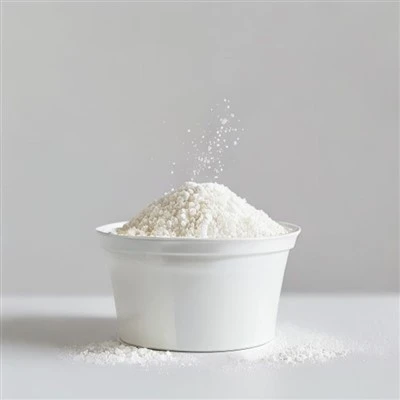
First, let’s get on the same page: refractories need to handle extreme temps (think 1,000°C up to 3,000°C!), resist thermal shock (when super hot stuff hits cold stuff and cracks), and stand up to chemical corrosion from metals, slags, or gases. The powders mixed into refractory blends are chosen specifically for those properties—no one wastes money on random powders. Now, let’s jump into the big ones we see every day, plus why they matter.
First up, alumina powder—you’ve definitely heard of this, it’s basically the rockstar of refractory powders. We supply calcined alumina, tabular alumina, and even reactive alumina, each for different needs. Calcined alumina’s the workhorse: it’s super pure (usually 99%+ Al2O3), melts at like 2,072°C, so it’s basic for high-heat refractories. Tabular alumina is the dense, big-crystal version of alumina—way better at withstanding thermal shock, so it’s used in places where heat cycles fast, like furnace linings that get turned on and off every shift. Reactive alumina is smaller, more fine-grained, so it acts as a binder and fills tiny gaps in the mix, making the final refractory stronger. We sell all three because one size doesn’t fit all—if a customer needs a lining for a steel mill ladle, tabular alumina’s non-negotiable, but a kiln for ceramic tiles might use a mix of calcined and reactive.
Next, magnesia powder, or magnesium oxide (MgO). This is the go-to for alkaline environments, like steel production, cement kilns, or non-ferrous metal smelting—think places where slag is super basic (high pH, like lye almost). Magnesia melts at a insane 2,800°C, which is higher than alumina, perfect for those ultra-high-heat spots. We supply dead-burned magnesia first—this is magnesia that’s been calcined at like 1,500°C, so it’s super dense, low reactivity, which means it doesn’t break down when hit by that harsh, high-pH slag. We also supply caustic calcined magnesia for some lower-heat, less aggressive uses, but 9 times out of 10, refractory folks are reaching for dead-burned. A quick tip here: magnesia doesn’t play well with acids, so you’d never use it in a glass furnace or something with acidic slag—stick that in silica territory instead.
Silica powder (SiO2) is the third big one, and this is for acidic refractory needs. Glass furnaces, petrochemical processing units, and some kilns that handle acidic materials love silica because it’s cheap, melts at 1,713°C (lower than alumina or magnesia, but still high enough for these applications), and resists corrosion from acidic slags or gases. We supply both fused silica and crystalline silica—fused silica is great for super high thermal shock resistance because it expands barely at all when heated, so it’s used in places where temps swing wildly. Crystalline silica is a bit more budget-friendly for steady, lower-heat acidic environments, like certain glass melting zones. Fun fact: silica refractories are actually the ones that line most glass furnaces I’ve heard about—they last forever in those acidic conditions.
Now, let’s talk about something maybe not everyone knows: zirconia powder (ZrO2). This is the fancy, high-performance one for when regular alumina, magnesia, or silica can’t cut it. Zirconia has an insanely high melting point (2,715°C) and amazing thermal shock resistance, especially when it’s stabilized with yttria (another inorganic compound) to prevent it from cracking when heated. We supply stabilized zirconia (8% yttria is the standard) for things like glass furnace regenerators, which are super hot and go through constant heat cycles, or even in aerospace components that need to handle re-entry temps. It’s not the cheapest powder, so it’s reserved for high-stakes applications, but it’s game-changing when you need something that won’t fail in extreme conditions. I’ve had a few customers come to us saying their old refractories cracked too fast with regular alumina, and switching to a tiny bit of stabilized zirconia changed their whole operation—no more unplanned downtime.
Wait, I can’t forget silicon carbide (SiC) powder—another underrated workhorse. This is a covalent compound, so it’s super hard, super heat-resistant, and has great thermal conductivity (it moves heat away fast, which helps with thermal shock). It melts at around 2,730°C, way higher than most metals, so it’s used in things like kiln shelves, furnace elements, and even parts for aluminum smelting where heat and wear are big issues. We supply both black and green silicon carbide—black is more for general refractory uses, green is purer for higher-performance jobs like semiconductor processing kilns. A lot of people mix SiC up with other carbides, but for refractories, this is the one that adds that extra strength under heat.
Now, let’s chat about why we, as a supplier, care so much about getting the right powder for the job, not just selling the cheapest stuff. A customer last month came to us saying their kiln was failing after 6 months, and they were using a random mix of alumina and silica from a different supplier. Turns out, they were processing aluminum, which creates a slightly acidic slag that was eating through their silica, and their thermal shock was too much for their low-grade alumina. We recommended switching to a mix of tabular alumina and a small amount of stabilized zirconia, plus adjusting their particle sizes (fine powders fill gaps, coarse powders add strength) and boom—their kiln is now going 18 months between repairs. That’s the kind of win we live for, because it’s not just selling powder; it’s solving a problem.
Wait, a quick common myth to bust: people think all refractory powders are just ground rock, but no—there’s processed powders too. Like, calcined alumina isn’t just mined and ground; it’s heated to super high temps to get that dense, stable structure. Tabular alumina is actually fused in electric arcs, then cooled to form big crystals, which is why it’s so good at shock. We handle all that processing in-house (well, with trusted partners who specialize in refractory-grade powders) so we can guarantee purity and consistency—something random bulk suppliers can’t do. If your powder has impurities like iron oxide, that will make your refractory crack or corrode way faster, so purity is non-negotiable.
Another thing we get asked a lot: “can I mix powders?” Yes, actually, that’s how a lot of refractories are made. For example, you might mix alumina (strength) with zirconia (thermal shock) to get the best of both worlds, or magnesia with a small amount of silica if you need to balance alkaline resistance with a lower cost. We work with customers to formulate custom blends too—if someone has a specific application, say a furnace for recycling lithium-ion batteries (which is a new, tricky market), we can mix tailored powders to handle the mixed slags and high temps. That’s why we’re not just a powder supplier; we’re a resource for figuring out what works.
Now, let’s wrap this up, because I know a lot of you are here because you’re working on a refractory project and need reliable powders. If you’re tired of inconsistent batches, too-high impurities, or powders that don’t perform when you need them, reach out to our team. We don’t do generic sales calls—we’ll ask about your exact application: temp range, environment (acidic, alkaline, thermal shock), downtime needs, and hook you up with the right powders, whether you need 50 lbs for a small repair or a full bulk order for a new furnace. We don’t post random links here, so just get in touch with us directly to chat through your needs—no pressure, just real help for your high-heat projects.
Wait, quick recap for anyone skimming: the common inorganic powders we supply for refractories are alumina (tabular, calcined, reactive), magnesia (dead-burned), silica, stabilized zirconia, and silicon carbide. Each has a specific job, and getting the right one (and the right grade) is the difference between a refractory that lasts 6 months and one that lasts 5 years. We’ve been in this game long enough to know that, and we’re here to help you get the powders that will keep your operations running smoothly.
Thanks for hanging out, and if you have questions about refractory powders or need a quote, just reach out to our team. We’re here for all your inorganic powder and compound needs.
Functional Intermediates & Specialty Chemicals References:
- Rice, R.W. (2006). Refractory Materials: Structure, Properties, and Performance. Academic Press.
- Schneider, W., & Bornhauser, P. (2018). Inorganic Powders for Advanced Refractories. Journal of the European Ceramic Society, 38(5), 1897-1912.
- Taylor, R. (2020). Practical Refractory Technology for High-Temperature Industrial Processes. CRC Press.
- Zhang, Y., et al. (2021). Stabilized Zirconia as a Performance Enhancer in Alumina-Based Refractories. Ceramics International, 47(12), 17234-17241.
Shanghai Dingwujin Chemical Co., Ltd.
Shanghai Dingwujin Chemical Co., Ltd. is one of the most professional inorganic powders & inorganic compounds suppliers in China. We cooperate with qualified Chinese manufacturers and provide high quality customized service. With over a decade of experience in local chemical trade, we have long been deeply engaged in the markets of EU Central & Eastern Europe, the Western Balkans, Ukraine and Moldova. Welcome to buy bulk high quality inorganic powders & inorganic compounds made in China here from our company.
Address: No. 12, Lane 199, Yefan Road, Yexie Town, Songjiang District, Shanghai, P.R.China
E-mail: dwjchem@dwjchem.com
WebSite: https://www.7dchem.com/
