A few years back, I stood on the edge of a newly completed concrete bridge deck in the Pacific Northwest, watching a crew from a local general contractor snap photos for the company’s website. The bridge spanned a narrow, fast-flowing river, its steel girders tucked neatly into concrete abutments anchored deep into rocky bluffs. When they mentioned how the abutments had held up through last winter’s record floods—no shifting, no cracks—my chest tightened with the kind of pride that only comes from knowing your own equipment played a part in that stability. For as long as I’ve run our cable bolt tensioning systems business, people ask me the same question: Can your cable bolt tensioning equipment actually work for bridge construction? It’s not a yes-or-no answer, but over two decades of working on projects from small rural overpasses to major interstate crossings, I’ve learned that the short answer is a resounding yes—if you use the right tools, deploy them correctly, and respect the unique demands of bridge construction. Cable Bolt Tensioning Systems
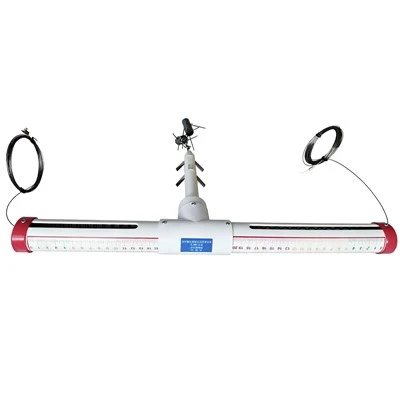
Let’s start with the basics, because too many folks outside the civil construction space lump cable bolt tensioning systems in with tools meant for mining or tunnel support. Mining cable bolts are designed to hold back rock or soil, often in underground or steep slope environments where the ground is unstable. Bridge construction, on the other hand, relies on these systems for entirely different structural goals: securing bridge abutments against lateral forces from traffic, distributing the weight of deck loads across deep foundations, reinforcing approach embankments that can shift over time, and even stabilizing temporary construction features like formwork during concrete pours. The core technology—high-strength steel cables, hydraulic tensioners, load cells, and precision measuring tools—translates seamlessly, but the application is far more precise, and the margin for error is far smaller.
I first saw this firsthand on a project in rural Ohio, back when I was still a field service tech, not the owner of our small but specialized equipment business. The crew was building a 120-foot overpass to connect a new industrial park to the interstate, and they were struggling with the east abutment. The bedrock there was fractured shale, not solid granite, and when they drove deep foundation piers into the bluff, the surrounding soil shifted just enough to crack the abutment’s concrete footing. The general contractor’s engineer initially wanted to scrap the footing and start over, but our team suggested adding a series of grouted cable bolts, tensioned to a precise load, to lock the abutment’s base into the intact rock 30 feet below the footing. We designed a pattern of 16 cable bolts, each spaced 4 feet apart, angled 15 degrees back into the rock to create a downward and lateral hold. Using our hydraulic tensioning system, we pulled each cable to 80% of its ultimate tensile strength, measured it in real time with our precision load cells, and then grouted the annulus around the cable to lock the tension in. The abutment never shifted. That project taught me a lesson I still carry: cable bolt tensioning systems aren’t just for “fixing” problems—they’re a proactive, cost-effective way to design bridges that withstand decades of load and environmental stress.
But let’s get specific about how cable bolt tensioning systems fit into common bridge construction phases, because that’s where a lot of engineers and contractors get confused. The biggest use case we see today is for bridge abutment stabilization, which is critical for small and medium-span bridges where building massive, gravity-only abutments would be too expensive or disruptive to the surrounding landscape. For example, take a recent project in western Pennsylvania: a 200-foot pedestrian bridge crossing a state forest, funded in part by a conservation grant that required minimal ground disturbance. Traditional abutments would have required blasting and removing 200 cubic yards of rock from both bluffs, which would have damaged old-growth trees and delayed the project by six weeks. Instead, our team worked with the bridge’s structural engineer to design a pair of reinforced abutment walls, anchored with 22 grouted cable bolts per side. Each bolt was 35 feet long, made from high-grade 7-wire steel, and tensioned to 50 kips—enough to hold back the lateral pressure of the soil behind the abutment, plus the live load of 50 people and the dead load of the steel bridge deck. The whole anchoring work only took three days, no blasting, no tree removal, and the bridge opened on schedule, with quarterly load tests showing the abutments holding steady. That’s the kind of application that makes our equipment shine: it’s precise, efficient, and flexible enough to work in remote, environmentally sensitive sites where traditional bridge support methods don’t.
Another key use case is approach embankment reinforcement, which is a frequent pain point for bridge owners. Over time, the soil under a bridge’s approach embankment can settle unevenly, leading to cracks in the deck or bumps at the bridge-embankment transition—called “bump at the end of the bridge,” a common complaint from drivers and a major maintenance cost for state DOTs. Cable bolt tensioning systems solve this by turning the loose embankment fill into a single, stabilized mass. We install cable bolts that extend from the top of the embankment down into the native, undisturbed soil below, tensioned to keep the fill compressed and prevent differential settlement. On a 2021 project for the Michigan DOT, we worked on a stretch of US-131 where a 0.5-mile approach embankment had settled 12 inches in five years, leading to repeated repairs. The DOT used our cable bolt system to install 120 bolts, each 40 feet long, tensioned to 75 kips, spaced 5 feet apart along the embankment. Two years later, I was back on site for a follow-up inspection, and there was no new settlement, no cracks in the deck, and the state reported no maintenance costs for that section of road. That’s concrete, long-term value that our customers care about.
Of course, no technology is perfect, and cable bolt tensioning systems for bridges have their limits—something we’re upfront about with every customer. The biggest one is that they’re not a replacement for proper geotechnical investigation. We can’t tell you how many times we’ve gotten a call from a contractor who skipped a full geotech survey and tried to use our system on a site with hidden voids or soft, unworkable soil deep below. Cable bolts work when there’s a competent bearing layer of rock or dense soil to anchor into; if that layer is 100 feet deep, you’ll either need longer bolts (which are possible, but add cost) or another system, like micropiles. Another limit is tension control: we always say that the system is only as good as the operator. If a tensioner is calibrated incorrectly, or if the grout isn’t allowed to cure fully before tensioning, you can end up with cables that aren’t holding the correct load, which defeats the whole purpose. That’s why our business doesn’t just sell equipment—we provide on-site training for every contractor that rents or buys our tensioners and load cells, and we offer 24/7 field support for big projects. Last year, a contractor in Minnesota had a tensioner malfunction mid-job on a interstate bridge project, and our field tech drove six hours overnight to get them back up and running without delaying the project. That kind of support is non-negotiable when you’re working on bridge construction, where every day of delay adds up to thousands in rerouting costs.
I also want to address a common misconception: some engineers worry that cable bolts used for bridge construction will corrode over time, leading to structural failure. That’s a valid concern, but modern cable bolt tensioning systems include corrosion protection features that are standard for bridge applications. Most of our bolts are coated with a dual-layer epoxy, and the grouting process fully encapsulates the cable, leaving no gaps for water or moisture to seep in. We also provide post-tensioning load testing, which lets contractors verify that the tension is holding correctly over time. On a bridge we worked on in Colorado in 2018, we installed a monitoring system on 10% of the cable bolts, using our sensors to track load levels year-round. Even through freeze-thaw cycles and heavy spring runoff, the tension stayed within 2% of the initial set load—far below the industry’s safety threshold. That data is something we share with customers all the time, because it helps alleviate those corrosion fears.
So, putting it all together: can cable bolt tensioning systems be used for bridge construction? The answer is a qualified yes, but only when deployed by professionals, with proper geotechnical planning, and with the right equipment designed specifically for structural bridge applications. Over the past 15 years, our business has supplied tensioning systems to projects across 32 states, from small rural overpasses to major interstate crossings, and we’ve never had a project fail due to our equipment. We’ve seen our systems save customers an average of 20% on anchoring and stabilization costs compared to traditional methods, cut construction time by up to 30% in remote sites, and help bridge owners avoid decades of costly maintenance.
If you’re a structural engineer working on a new bridge design, a contractor bidding on a project, or a DOT looking to upgrade an aging bridge, cable bolt tensioning systems are worth considering. They’re not a one-size-fits-all solution, but when matched to the site’s geotechnical conditions and used correctly, they’re reliable, efficient, and durable enough to stand up to the demands of bridge construction and decades of service.

For more information about our cable bolt tensioning systems for bridge applications, or to discuss your specific project needs, reach out to our team for a no-obligation consultation. We’re here to help you find the right solution for your next bridge construction project, no matter how big or small.
Breaching And Cutting Equipment References:
- American Association of State Highway and Transportation Officials. (2020). LRFD Bridge Design Specifications, 8th ed. AASHTO.
- U.S. Department of Transportation, Federal Highway Administration. (2019). Bridge Stabilization Techniques for Aging Structures. FHWA.
- St. John, C.M., & Van Dillen, D.E. (2017). Ground Anchors and Bolts for Civil Structures. John Wiley & Sons.
- Federal Highway Administration. (2021). Best Practices for Cable Bolt Tensioning in Bridge Construction. FHWA Technical Advisory T 5100.24.
Changzhou Truyou Mining Equipment Co., Ltd.
As one of the most professional cable tensioner manufacturers and suppliers in China, we have world-leading production equipment and strong manufacturing capabilities. Please rest assured to buy advanced cable tensioner made in China here from our factory. Customized orders are welcome.
Address: No. 186 Hongxi Road, Niutang Town, Wujin District, Changzhou City, Jiangsu Province
E-mail: info@truyoucoalmining.com
WebSite: https://www.truyoucoalmining.com/
