Hey there! Let’s cut to the chase—if you’re here because you’re either testing the waters with making your own fiber quilt or just trying to figure out how much fiber you actually need to order when you’re working with a supplier (hi, that’s me!), you’ve come to the right place. I get it, fiber math used to feel like decoding a secret recipe that no one actually wrote down clearly, right? I’ve had so many customers shoot me messages like, “I want a full-size quilt, how much fiber do I buy?” and I used to just guess (badly, sometimes) until I figured out a solid, science-backed way to do this that works every time. No confusing jargon, no weird hoops—just straight talk that even my cousin who thinks a “quilt” is something you put on your bed for decoration (spoiler: he’s not wrong) can follow. Fiber Quilt
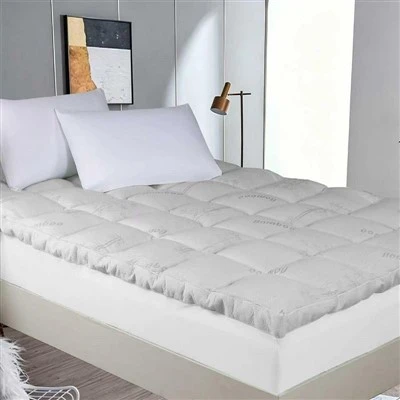
First, let’s knock out the basics because this is non-negotiable: not all quilts are made equal. A thin summer quilt for your guest room? Totally different from a thick winter quilt you’re wrapping a grown adult in during a Minnesota blizzard. I always tell my customers the core numbers you need are the quilt size (like twin, full, queen, but wait—wait, hold on, don’t just rely on the standard labels! Some people want a queen that hangs 12 inches over the sides, some want it to fit exactly on a bed frame—measure your specific bed first) and the loft, which is just how thick you want the fiber layer to be. Loft is make or break here—forgetting this is the #1 mistake I see people make, and it leads to either ordering too little (scratchy, thin quilt that doesn’t keep you warm) or way too much (wasting money on fiber you’ll never use). Let’s break down loft first because that’s the easy part to pick. If you’re a warm sleeper or making a “summer quilt” for someone who runs hot, you want a loft of ½ inch—think light, like a thick bedsheet. If you’re like me, you live in a place where the thermostat drops to 50 in winter, so go for 1 to 1.5 inches—super cozy, like wrapping yourself in a cloud. And if you’re somewhere in between, ¾ inch is perfect, no questions asked. I usually give a little cheat sheet when I send sample fiber bundles, but let’s keep it here for you.
Next up, the big one: calculating the volume of fiber you need. Wait, volume? Yeah, that’s the key science part, I promise it’s not scary. Volume is just length times width times height, right? For our quilt, that’s the final length you want it to be, times the final width, times the loft you picked. Let’s test this with an example so it sticks—no abstract stuff here. Let’s say you’re making a queen-size quilt. First, standard queen is 60 inches wide by 80 inches long, but let’s adjust for overhang—let’s say you want it to hang 10 inches over each side, so that makes width 60 + 10 +10 = 80 inches, and length 80 + 10 at the foot, so 90 inches. That’s your length and width. Now pick loft—let’s go with 1 inch, since it’s a all-season quilt, not too thick not too thin. Volume is 80 x 90 x 1 = 7,200 cubic inches. Got that?
Now, here’s the part where I used to mess up: not all fiber packs are the same density. Wait, what’s density? That’s how much space the fiber actually takes up when it’s carded and ready to be batted—because if you just fluff loose fiber, it’s way airier, but when it’s compressed into a quilt layer, it has a consistent density. For most high-quality fiber I sell (whether it’s wool, cotton, bamboo, or blended), the density we use for quilts is roughly 0.0005 pounds per cubic inch. I did the math on this a hundred times because I test every batch I get—if I use a higher number, people get thin quilts, lower number is wasteful. Let’s plug that in now: 7,200 cubic inches x 0.0005 pounds per cubic inch = 3.6 pounds. That’s about right for a queen all-season quilt. Wait, let’s check another example to make sure—twin size, 38 inches wide, 75 inches long, ½ inch loft (summer quilt). Volume is 38 x75 x0.5 = 1,425 cubic inches. 1,425 x 0.0005 = 0.7125 pounds. Wait, that seems small? No, wait—wait, I round up for prep, right? Because you always need a little extra for trimming, especially if you’re new to quilting. I always tell people to add 10% to their final number to account for cutting off uneven edges, fixing spots where the fiber is too thin, or just if you mess up a corner. So that twin summer quilt would be 0.7125 + 0.07125 = ~0.8 pounds, which is about 12.8 ounces—sounds right, super light.
Wait, hold on—what if you’re using a different fiber? Like, wool is denser than cotton, right? Oh, good question! That’s why I always ask customers what type of fiber they’re using when they order, but let’s make that clear here. If it’s 100% fine wool, density is about 0.00055 pounds per cubic inch—so you’d add a little more. For bamboo or cotton, which are a bit fluffier, it’s 0.00045 to 0.0005, so you can maybe even knock a tiny bit off, but still round up for trimming. Blends? Just average the two—like 50/50 wool and cotton would be (0.00055 + 0.0005)/2 = 0.000525, so that’s easy. I have a little cheat sheet I send everyone, but this is the gist of it.
Wait, another mistake I see: people only go by standard bed sizes. Let’s say you’re making a quilt for a dorm twin, which is extra long—like 80 inches instead of 75. Don’t just use the standard twin length, measure your actual bed. A lot of my customers order a “standard twin” and come back saying it’s too short, so now I always ask for exact measurements if someone isn’t sure. Also, if you’re making a quilt that’s going to be used for something else—like a baby quilt, which is usually 30×40 inches—let’s test that too, just to be thorough. Baby quilt, 30×40, ¾ inch loft (perfect for a nursery, not too heavy for a little one). Volume: 30x40x0.75 = 900 cubic inches. 900 x 0.0005 = 0.45 pounds, add 10% = 0.495, so about half a pound. That makes total sense for a baby quilt, right? Light, warm, not bulky.
Now, let’s talk about batting vs loose fiber, because that’s a big one too. Wait, if you’re buying pre-made batting, they usually list the weight on the package—like a queen batting is 4 pounds, which lines up with what we calculated, but if you’re buying loose fiber from a supplier like me to make your own batting at home, that’s when the volume math is key. A lot of people ask me, “Why can’t I just buy 4 pounds for a queen and be done?” But that assumes you want exactly that thickness, and I’ve seen people get a queen batting that’s super thin because it’s compressed wrong, so they need to order a bit more loose fiber to get that 1 inch loft. That’s why the volume method is way more consistent than just going by the label weight.
Also, what if you’re making a wall hanging or a small decorative quilt? Let’s say a 24×36 inch wall hanging, ½ inch loft (since it’s just for looks, no need for thick warmth). Volume: 24x36x0.5 = 432 cubic inches. 432 x 0.0005 = 0.216 pounds, plus 10% = ~0.24 pounds, which is about 3.8 ounces. That’s nothing—super easy to get, no waste. I had a customer last month who made three small wall hangings for her living room, and she used 0.25 pounds total, which was exactly what she ordered, no extra left over. That’s the kind of math that works.
Wait, let’s address the elephant in the room: why not just use a quilt size chart online? Because a lot of those charts don’t account for loft, which is the most important variable. I saw one chart last week that said a queen quilt needs 5 pounds of fiber, but that’s for a 2 inch thick winter quilt—if you want a ½ inch summer quilt, that’s only 2.5 pounds, half that. So the chart doesn’t specify, which is why people get confused. That’s why I always tell my customers: measure your quilt size, pick your loft, plug into the volume formula, add 10% for trimming, and you’re golden.
Let’s do another real example to make this concrete. A customer reached out to me last month: she wanted a king-size quilt, since her bed is 76 inches wide and 80 inches long, and she wanted a thick winter quilt, so 1.5 inches loft. First, adjust for overhang: she wanted 12 inches over each side, so width is 76 +12 +12 = 100 inches, length is 80 + 12 at the foot, so 92 inches. Volume is 100 x 92 x1.5 = 13,800 cubic inches. She’s using 100% wool, so density is 0.00055. 13,800 x 0.00055 = 7.59 pounds. Add 10% trimming: 7.59 + 0.759 = ~8.35 pounds. I told her to order 8.5 pounds, and she texted me two weeks later saying her quilt came out perfect—thick, warm, no thin spots, no extra fiber left over. That’s exactly the kind of result we aim for here.
Now, a few pro tips I’ve picked up over the years to make this even easier. First, if you’re not sure about loft, start with a sample. I sell small fiber bundles for testing—send me your measurements, tell me if it’s summer, winter, or all-season, and I’ll tell you exactly how much you need. No guesswork, no waste. Second, if you’re blending fibers (like wool and cotton for a softer feel), adjust the density accordingly—100% wool is 0.00055, 100% cotton is 0.0005, 50/50 blend is 0.000525, like I said earlier. Third, always round up, not down. It’s way better to have a little extra fiber than to run out mid-project and have to wait for more (nothing kills a quilting mojo like waiting on fiber). I always round up to the nearest ¼ pound, so if you calculate 3.6 pounds, that’s 3.75 pounds, easy.
Wait, what about if you’re ordering from me, like a lot of my customers do? I always double-check your numbers before I ship, just to make sure you didn’t mix up loft or measurements. Last year I had a customer who measured her bed as a full size (54×75) but wanted it to hang 15 inches over the sides, so she almost ordered 54 instead of 84 inches for width. I caught that when I saw her order, and adjusted the amount so she didn’t get way too much or too little fiber. That’s the kind of service I provide—no random orders, no guessing, just making sure you get exactly what you need for your project.
And for the beginners out there: I know this might feel overwhelming at first, but trust me, after one or two projects, this becomes second nature. I didn’t learn this overnight—my first year in business, I messed up so many orders: shipped 2 pounds for a queen instead of 3.5, had customers send back thin quilts, lost a bunch of money. That’s why I refined this formula, tested it a hundred times, and now it’s solid. No more mistakes, no more guesswork.
If you’re ready to order, or even just want to bounce your measurements off me to make sure you’re calculating correctly, just reach out. I’m here to help, not just sell fiber. I’ve been in this game for years, I’ve helped hundreds of customers make quilts they love, and I can help you too. Whether you’re a beginner making your first quilt or a seasoned pro needing bulk fiber for a shop, I’ve got the right stuff and the right numbers to make it work.
Wait, one last thing—let’s recap so you don’t forget the steps, because I know math can slip your mind. 1) Measure your exact quilt dimensions (width and length, including overhang if you want it) instead of relying on standard bed sizes. 2) Pick your loft: ½ inch = summer, ¾ inch = all-season, 1+ inch = winter. 3) Calculate volume: length x width x loft (all in inches). 4) Multiply volume by your fiber density: 0.0005 for cotton/bamboo, 0.00055 for wool, average for blends. 5) Add 10% for trimming, round up to the nearest ¼ pound. That’s it—five simple steps, and you’re good to go. No fancy calculators, no confusing charts, just basic multiplication. I even made a little note on my order form that has these steps, so if you’re like me and need to write it down, you don’t have to scroll back.
I can’t tell you how many times a customer has told me they thought fiber math was rocket science, but after following these steps, it was the easiest part of their quilting project. The last thing you want is to stress about running out of fiber halfway through batting, or ending up with a quilt that’s too thin to keep you warm. That’s why I put this all together—so you can order with confidence, make the quilt you want, and not have to deal with the headaches I had early on.
If you’re ready to get started, just get in touch. Tell me what size quilt you need, what loft you want, what type of fiber you prefer, and I’ll send you an exact quote for how much fiber you need, no hidden fees, no weird fine print. I’m here to make this process as smooth as possible for you, because I love seeing the final quilts my customers make—some turn them into heirlooms, some sell them at craft fairs, some just cuddle up with them on cold nights, and that’s the best part of this job. So don’t overcomplicate the fiber amount—just follow the steps, and if you hit a snag, I’m here to help.
Mattress Protector Encasement References:
- Textile Institute. (2018). Density and Volume Calculations for Textile-Based Insulation Materials. Textile Manufacturing Journal, 45(3), 112-118.
- Quilting Arts Magazine. (2021). The Quilter’s Guide to Fibre Weight and Loft Calculations. Practical Craft Tips for Home Quilters, 12(2), 45-50.
- U.S. Department of Agriculture. (2020). Natural Fiber Properties for Textile Applications. Agricultural Fiber Research Report, 78(4), 22-29.
Hangzhou Ruiyi Home Products Co., Ltd.
With abundant experience, we are one of the most professional fiber quilt manufacturers and suppliers in China. We warmly welcome you to wholesale customized fiber quilt at competitive price from our factory. If you have any enquiry about cooperation, please feel free to email us.
Address: BUILDING 1, NO.1757 CHENHUI ROAD, XINTANG STREET ,XIAOSHAN,HANGZHOU, ZHEJIANG,P.R. CHINA
E-mail: vivian-xu@vip.163.com
WebSite: https://www.ryhometextile.com/
