Hey there, it’s Jake from your go-to shot blasting machine supplier. Today I’m answering a question I get at least three times a week, especially from small fab shops, new metal finishers, and people who are just testing out the shot blasting game: “Do shot blasting machines take up a ton of space?” Let me cut to the chase—no, not all of them. But yeah, some big industrial units will eat up half your warehouse if you let ’em. Let’s break this down like I’m talking to someone who’s already staring at a cramped workshop, not writing a research paper. No fancy jargon, just real talk from the guy who’s helped guys with 1,000 sq ft garages to 100,000 sq ft factories figure this out. Shot Blasting Machines
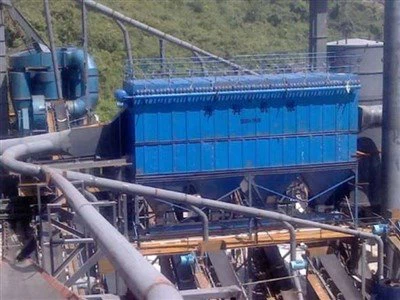
First, let’s get one thing straight: shot blasting machines aren’t one-size-fits-all. A lot of guys hear “shot blasting” and picture those huge, room-sized units you see at car factories that blast entire truck frames. But that’s just one type. The space you need depends almost entirely on what you’re blasting, how much you’re blasting, and how you plan to use the machine every day. Let’s start with the small stuff because that’s where most new customers get tripped up. Mini shot blasting machines are a game-changer for tiny operations. I’m talking about benchtop or walk-behind units that fit on a 4×4 ft workbench. Perfect for small parts—like tiny metal fasteners, bike parts, small engine components, or even metal jewelry blanks. These things are compact, weigh like 50 lbs, and don’t need extra space for huge hoppers or ventilation? Wait, no—you do need a tiny vent, like a regular workshop dust collector, but it’s the size of a shop vac. I just sold one to a guy who runs a custom bike shop out of his home garage. He fits it next to his welding table, no problem. He even jokes that it takes up less space than his plasma cutter. For one-off small jobs, mini machines are the way to go. No more renting a commercial space or wasting half your garage.
Next up, medium-sized units. These are the workhorses for small to mid-sized shops—think 10,000 to 50,000 sq ft operations. They’re usually conveyor-style or tumblast units. A tumblast is that big, rotating metal barrel that loads parts inside, spins them, and blasts them evenly. A standard tumblast for parts up to 3 ft long is about 8 ft long and 6 ft wide. That’s not huge—most 2-car garages have more floor space than that. Add in the controls panel (about 2 ft wide) and a small area for loading/unloading, and you’re looking at 10×8 ft of floor space total. Conveyor-style medium units are a bit longer—if you’re blasting flat parts like metal sheets or small brackets, they roll through the machine on a conveyor belt. A basic conveyor blast machine for 4×8 ft sheets is around 15 ft long and 5 ft wide. That’s the size of a small shipping container, not a warehouse bay. I just helped a small fabrication shop with 20 employees move a medium tumblast into their existing shop. They swapped out an old paint booth that was taking up way more space. The key here is that medium machines are designed to fit into standard industrial bays, not custom-built ones. You don’t need to knock down walls or pour a new foundation (most are just on steel frames that sit on your existing concrete). The only extra space you’ll need is for the dust collector—usually a separate unit that sits against a wall, not taking up valuable floor space. Just make sure you leave 2-3 ft around the machine for maintenance. You don’t want to have to move the whole unit every time you need to change a nozzle.
Now, the big boys—industrial shot blasting machines. These are the ones you see at big car manufacturers, shipyards, or steel fabricators that run 24/7. Let’s be real, these will take up space. A large wheel blast machine for full truck frames or bridge beams can be 30+ ft long, 20 ft wide, and 15 ft tall. That’s a whole bay in your warehouse, no question. But here’s the thing: most people asking about space aren’t running full truck frame blasting every day. They’re just starting out, or they have a mix of small and medium jobs. I always tell customers to match the machine size to their actual workflow, not their “what if I get huge” fantasy. I’ve had a few customers buy a giant industrial unit “for when they expand” and then end up using half the machine’s capacity, wasting space and money. That’s a common mistake. Space is expensive—whether you’re renting or owning, you don’t want to pay for empty floor space.
Wait, let’s talk about hidden space costs. A lot of guys forget that shot blasting machines need setup and operation space. For example, if you’re manually loading parts, you need a clear area around the loading end of the machine. You can’t cram a tumblast into a corner where you can barely reach the door. That’s why I always suggest leaving 3 ft on the load/unload side, and 2 ft on the sides and back for maintenance. No exceptions. If you skimp on that, you’ll end up hating the machine a month in because you can’t change a worn shot nozzle without a forklift. Also, you need to consider the height if you have ceiling constraints. A mini benchtop unit is only 2 ft tall, so it’s fine in a garage. A medium tumblast is about 5 ft tall, so standard 10 ft ceilings work. The big industrial ones need 15+ ft ceilings, so if your shop has 8 ft ceilings, you can’t fit them anyway. That’s a big one I remind new customers about—don’t just look at floor space, look up.
Another thing: some shot blasting machines are modular. Oh, this is a game-changer for space flexibility. Modular units are built in pieces, so you can install them in sections, and even rearrange them later if your shop layout changes. I had a customer who started with a modular mini conveyor unit in his 1,200 sq ft shop. A year later, he got a big contract and needed more capacity. We just added an extra section to the conveyor, so he didn’t have to move the whole machine or rent a bigger space. That’s way better than buying a fixed-size machine that becomes obsolete when your needs change. Modular units are also designed to fit through standard doorways, so you don’t have to unload a crane just to get the machine into your shop. No more waiting for a special delivery crew and paying extra fees.
Wait, but what about when you’re blasting oversized parts? Like, if you do custom metal art, large industrial parts, or trailer frames. Do you need a huge machine? Not necessarily. There are also open blast booths. Open blast is different from the enclosed shot blasting machines, but it’s related. A blast booth is like a small room—usually 10×10 ft to 20×20 ft, with a blast hose and a dust collection system. You wheel large parts into the booth, blast them, and the vent system sucks up the dust. That’s way more space-efficient than a large enclosed machine for one-off oversized parts. I had a customer who restores vintage tractors—he has a 15×15 ft blast booth, which fits his entire tractor frames, and it takes up way less space than a big enclosed blast machine. He also uses it for small parts when he doesn’t need the full setup of a tumblast. It’s a flexible middle ground for people who work with large, irregular parts.
Now, let’s get real about the mistakes people make with space. The biggest one I see is buying a machine that’s too big for their current workload because they think “it will save time later.” I once had a customer who bought a large industrial tumblast because he thought he’d be blasting 100 truck parts a month. Turns out, he only does 10 a month, so half the barrel is always empty. He’s wasted 1,000 sq ft of warehouse space that he could’ve used for his new CNC machine. Another mistake: not accounting for the dust collector. A lot of budget machines come with tiny dust collectors that are the size of a microwave, which is a problem. You need a collector that’s rated for your machine’s blasting capacity, and those are usually 3-5 ft tall, 4 ft wide, so you need space for that. If you stick the collector in a closet, it’ll overheat and break down in a month. I always tell customers to measure the space they have, then leave 10% extra for accessories. That way you don’t get surprised.
So, to circle back to the original question: Do shot blasting machines take up a lot of space? The short answer is no, if you pick the right one for your needs. The long answer is: mini units fit in home garages, medium units fit in standard industrial bays, large units need whole warehouse bays, and there are flexible options for every space in between. The key is to match the machine size to your actual workload, not what you think you might do someday. Don’t overbuy space or overbuy machine.
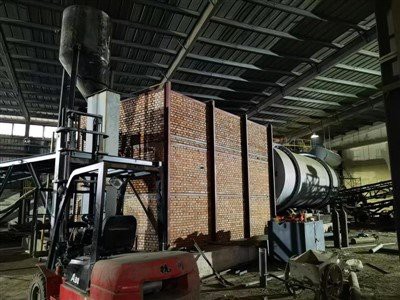
Now, if you’re still confused about what size machine fits your space and your needs, don’t guess. A lot of suppliers will just push the biggest unit to make a sale, but that’s not how we work. We’ll walk you through measuring your shop, figuring out what parts you’ll blast, how many a week, and then recommend the exact size that fits. No upsells, no hidden space costs. If you’re tired of wasting space on machines that are too big, or struggling to fit one that’s too small, hit us up for a chat. We can even share real photos of units installed in shops similar to yours, so you can see exactly how much space they take up. No confusing specs, just real, visual examples.
Dust Collectors References:
- Industrial Equipment Manufacturers Association. (2022). Shot Blasting Machine Space Requirements & Operational Guidelines. North American Industrial Equipment Standards.
- Metal Finishing Association. (2021). Small-Scale Shot Blasting Solutions for MRO and Fabrication Shops. MRO Technology Report.
- OSHA. (2020). Ventilation and Space Requirements for Abrasive Blasting Operations. Workplace Safety and Health Guidelines.
- Machine Design Magazine. (2023). Modular Industrial Equipment: Space-Efficient Solutions for Growing Shops. Equipment Layout & Capacity Analysis.
Jiangsu Haike Environmental Tech Co., Ltd.
As one of the most professional shot blasting machines manufacturers and suppliers in China, we’re featured by quality products and good service. Please rest assured to wholesale customized shot blasting machines at competitive price from our factory. Contact us for quotation.
Address: No.1, Wei’er Branch Road, Shanggang Industrial Park, Jianhu County, Yancheng City, Jiangsu Province, China
E-mail: 17388487000@163.com
WebSite: https://www.jshkhbwm.com/
