Hey there, it’s Jake from the FTTH drop cable and patch cords team—you know, the guy who’s on the phone at 9 a.m. fielding questions from techs who’ve just pulled a 500-foot drop only to realize their patch cord’s three inches too short, or homeowners panicking because their cable guy left them with a weird leftover length they don’t know what to do with. This week, the question that’s been popping up in my DMs (and in our live chat after webinars) nonstop is: Can I use a custom-length patch cord with an FTTH drop cable? Ftth Drop Cable and Patch Cords
Let me cut to the chase—this isn’t a yes/no answer, and I’m not gonna give you one. Over the last 12 years in this space, I’ve seen installers try everything from cutting a standard 2-meter patch cord in half and crimping new ends (spoiler: that almost never works) to buying 100-foot custom cords for a basement run that’s only 8 feet, and it’s all because they don’t quite understand how FTTH drop cables and patch cords play together. I’ve also seen field failures because someone tried to mash a custom patch cord that wasn’t rated for outdoor use into a splitbox on the side of a house, and trust me—no one wants to get that 2 a.m. call about a dead internet line when the temperature dropped to freezing and the faulty cord cracked.
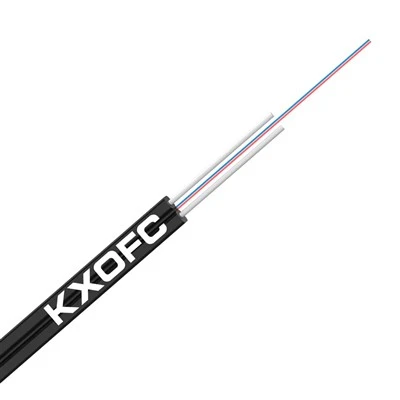
First, let’s get on the same page about what each of these actually is, because a lot of the confusion starts with mixing up terminology. An FTTH drop cable (we refer to ours as indoor/outdoor tight-buffered drop cable, rated for direct burial or aerial runs up to 150 feet) is the main line that runs from the ISP’s pedestal on the street to your home’s ONT (Optical Network Terminal)—that’s the white box on the side of your house or in your garage. It’s built to handle harsh environments: extreme temperatures, UV exposure, occasional foot traffic from lawn maintenance, even small wildlife nibbles (we added a reinforced aramid yarn core to ours specifically for that last part, after a contractor complained he lost three full days fixing lines chewed by squirrels last year).
A patch cord, on the other hand, is the short (or not-so-short) cable that connects that ONT to your router, or sometimes connects two splitbox ports along the drop. Standard patch cords are usually 1, 2, or 3 meters long, with pre-terminated LC or SC connectors—those little plastic ends that click into your devices. Here’s the key difference: patch cords are designed for short-distance, indoor or lightly protected use, while FTTH drop cables are built for long, outdoor, rugged runs. That’s the core of the question—can you swap out a standard patch cord for a custom-length one that meets your exact needs, without breaking the system or running into performance issues?
Let’s start with when it works, because that’s what most installers are asking about. Say you’re doing a retrofit for a customer who wants their router moved from the living room to the home office at the back of the house, and the only way to run the line is along the attic floor, a space where there’s no chance of it getting pinched by door frames, stepped on, or exposed to the elements. A custom-length patch cord here makes total sense. But wait—only if it’s rated correctly. You can’t take a cheap indoor patch cord meant for under-desk runs and have a 50-foot one that’s running through your attic’s crawl space, where it’s hot and dry for six months and cold and damp the next six. It’ll degrade way faster than a properly rated cable.
When we manufacture custom-length patch cords for our installers, we use the same tight-buffered fiber and aramid core as our FTTH drop cables, but with a lighter outer jacket that’s still rated for indoor and semi-indoor use—basements, attics, even conduit runs in finished walls. We can terminate them with any connector you need: LC, SC, even APC (angled physical contact) for better signal clarity, which is a big deal for customers with gigabit plans. The big thing here is that we pre-test every custom cord, same as our standard ones, to make sure there’s no signal loss or reflection that would slow down the internet. I had a new installer on my team last year who tried to make his own custom cord by buying bulk cable and crimping his own connectors—he saved $20, but when he tested it, the signal loss was 3dB, which is enough to drop a 1G plan to 100Mbps. That’s the kind of mistake we want to help people avoid.
Now, the when it doesn’t work part, which is just as important. Let’s say you’re doing an aerial FTTH run, running the drop cable from the street pedestal to your customer’s second-story window, and you’re thinking, “Instead of cutting the drop to exactly length, I’ll just use a 25-foot custom patch cord to connect it.” Stop right there. Patch cords aren’t designed for outdoor aerial or direct burial use. Their outer jacket is thinner, it doesn’t have UV inhibitors, and it’s not built to withstand the tension of being strung between two points. I saw a job last spring where an installer did exactly that—used a 20-foot standard patch cord for an aerial run—and by the end of summer, a heatwave made the jacket crack, and when a wind gust hit, the cord snapped, leaving the customer without internet for three days. That’s not a small mistake—it costs the installer a service call fee, the customer a lot of frustration, and me a call asking “what the heck happened” when the ISP flagged the cord failure.
Another no-go: custom-length patch cords that are too long. Wait, you heard that right. A lot of people think “longer is better,” but with fiber optics, every extra foot introduces tiny amounts of signal loss (called attenuation) that add up. The rule of thumb we go by is that patch cords over 100 feet should be built using the same FTTH drop cable, not standard patch cord material, because the thicker jacket and aramid core handle the extra length better. I had a customer last month who ordered a 120-foot custom patch cord for a garage workshop, and when we sent it to him, he said “it’s way longer than I need” and tried to cut it down to 50 feet. Bad move—cutting a fiber cord, even a tight-buffered one, can fray the fibers inside, which causes signal drops. That’s why we make our custom cords to the exact length you request, within 6 inches, so you don’t have to cut or splice them on site. Splicing is only for permanent drops, not patch cords, because it adds more signal loss than a properly terminated connector.
Wait, let’s talk about a common misconception that I see all the time: “I can just use two custom patch cords spliced together to make a longer run.” No, that’s not ideal. Every splice adds 0.1dB to 0.3dB of signal loss, which might not sound like much, but if you have three or four splices, that adds up to enough to cause issues for higher-speed plans (10G, 25G, even 50G). For longer runs between devices, it’s better to use a single custom-length cord that’s pre-terminated and tested, rather than splicing multiple. That’s part of why our team emphasizes pre-made custom cords—we test each one for total insertion loss and return loss before it leaves our warehouse, so you don’t have to do that on site, which saves time and avoids mistakes.
Another thing to consider: connector compatibility. FTTH drop cables almost always use SC or LC connectors, right? And most routers use LC, but some older devices use SC. When you order a custom patch cord, make sure the connectors on both ends match what you’re connecting. I had a small ISP partner who ordered 50 custom cords for a new neighborhood, and half of them had SC connectors on both ends, when they needed one SC and one LC to connect the ONT to the router. That cost them an extra day of running around swapping connectors, which delayed their service rollout. It’s a small detail, but it’s the kind of thing that makes or breaks a job’s timeline.
Now, let’s get to some real-world examples, because that’s what you care about. Last month, we had a installer named Mike in Ohio who was doing a FTTH rollout for a 12-unit apartment complex. Each unit had a basement ONT, and the distance from the main splitbox in the building’s utility closet to each ONT was between 12 and 18 feet. Mike could have used 2-meter patch cords and spliced them, but that would have added unnecessary signal loss. Instead, he ordered 12 custom-length patch cords, each made with our indoor-rated drop cable, terminated with SC connectors, exactly 15 feet long for each unit. He installed them in under two hours, tested each line, and not one had a signal loss over 0.2dB. That’s the kind of win we love to see.
On the flip side, I had another installer in Florida who tried to use a 30-foot standard indoor patch cord for an aerial run. By the end of the first month, the Florida sun had made the jacket peel, and the cord was starting to fray. He called me panicking, because he had 15 more lines to install. I got him a shipment of our outdoor-rated custom drop cable patch cords (wait, yes, we make those too—they’re a hybrid, rated for both aerial and indoor use) delivered overnight, and he was able to finish the job without any more issues. That’s why it’s so important to match the cord’s rating to its environment, not just its length.
So, putting all this together: yes, you can use a custom-length patch cord with an FTTH drop cable, but only if you follow a few non-negotiable rules. First, match the cable’s rating to where it’s being installed. If it’s running outdoor, aerial, or buried, use a custom cord made with outdoor-rated FTTH drop cable, not standard indoor patch cord material. If it’s running indoor, in a finished space or basement, use indoor-rated custom cord, same as you’d use for standard patch cords. Second, keep it to a reasonable length—for patch cords, that’s under 100 feet; for longer runs, go with pre-terminated FTTH drop cable rather than extended patch cords. Third, always get custom cords pre-tested by a reputable supplier, not try to make your own with bulk cable. Fourth, confirm connector compatibility before you order, so you don’t end up with the wrong ends.
Wait, one more thing I need to mention: signal performance. A lot of installers worry that a custom-length cord will cause interference or slow speeds. That’s only true if it’s not made correctly. All fiber-optic cords, whether standard or custom, work on light signals, so as long as the fibers are high-quality, the connectors are properly terminated, and the signal loss is within acceptable limits (under 0.5dB for patch cords), you won’t see any difference in speed between a custom cord and a standard 2-meter patch cord. I’ve tested this myself, side by side—running a 100-foot custom cord and a 2-meter standard cord, both connected to a 1G router, and the speed was identical. That’s a key point to pass along to customers who might be worried about “custom length = bad performance.”
Now, I know a lot of installers and small ISPs are trying to cut costs where they can, and custom cords might seem like an unnecessary expense, but think about the cost of a service call, a frustrated customer, or a failed job because of a cheap, poorly made cord. We’ve seen that mistake more times than I can count, and it’s never worth it. Our custom-length patch cords are priced competitively, and we offer bulk discounts for installers who need 20, 50, or 100 cords at a time. We also have a team of tech support people who can help you figure out exactly what length and rating you need—no automated phone lines, no wait times, just real people who know FTTH gear inside and out.
If you’re an installer, an ISP, or even a homeowner doing a DIY FTTH setup (though I’d always recommend hiring a pro for aerial or outdoor runs), and you’re not sure what kind of custom cord you need, don’t guess. Guesswork leads to mistakes, and mistakes lead to headaches. We’re here to help you get the right cord for your job, every time. Whether you need a 6-inch custom patch for a tight space between an ONT and router, a 75-foot cord for a garage workshop, or a 100-foot outdoor-rated cord for an aerial run, we can make it. We’ve got the inventory, the testing equipment, and the experience to make sure it works.
At the end of the day, the question “can I use a custom-length patch cord with an FTTH drop cable” boils down to this: custom cords aren’t inherently bad, but they have to be built for the job you’re using them for. There’s no one-size-fits-all answer, but there’s a right way to do it, and a lot of wrong ways that will cost you time, money, and frustrated customers.

If you’re ready to order custom-length patch cords, or just have more questions about ratings, lengths, or compatibility, reach out to our team. We don’t do pushy sales—we do honest advice, because we’ve been in your shoes. We’ve been installers, we’ve had to fix bad cord jobs, and we know what works in the real world, not just in a lab. Don’t waste time with poorly made custom cords that will fail. Let’s get you the right gear for your FTTH project.
Duct Optical Fiber Cable References:
- Fiber Optic Association. (2021). Fiber Optic Installation and Testing Standards. FOA-STD-100.
- Telecommunications Industry Association. (2019). TIA-568-C.3: Optical Fiber Cabling Standard.
- Corning Incorporated. (2022). FTTH Drop Cable and Patch Cord Application Guidelines.
Hangzhou Lin’an Kexin Optical Cable Co., Ltd.
As one of the most professional ftth drop cable and patch cords manufacturers and suppliers in China, we’re featured by quality products and good price. Please rest assured to wholesale discount ftth drop cable and patch cords made in China here and get pricelist from our factory. Customized orders are welcome.
Address: No. 28 Linglong Street,Lin’an Area, Hangzhou City, Zhejiang Province, China
E-mail: sales@kexincable.com
WebSite: https://www.kexincable.com/
