Hey there, if you’ve ever spent time around diesel air compressors out in the field—whether it’s on a job site, down a well, or even at a remote construction spot—you’ve probably noticed how much they act differently when the weather’s boiling hot vs. freezing cold. As someone who’s been selling these bad boys for years (I’m not some corporate suit stuck behind a desk, I’m out here talking to guys who fire these things up at 5 a.m. or when the mercury’s spiking over 100), I can tell you ambient temp isn’t just a small factor—it’s the biggest variable that changes how your compressor runs, how much air it makes, and even how long it lasts. Let’s break this down like we’re sitting on a toolbox with a cold soda, no fancy jargon promised. Diesel Air Compressor
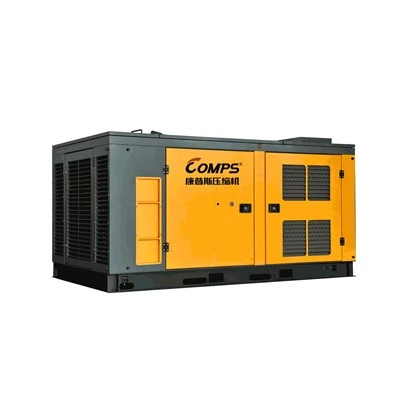
First off, let’s start with the basics: diesel air compressors aren’t just a single machine. They’ve got a diesel engine that powers the air pump (the air end, we call it that) and a bunch of little systems—cooling, fuel, lube, electronics—that all work together. Each of these parts reacts differently to temperature shifts, which all add up to the whole compressor’s performance. Let’s start with the cold, because that’s the one guys always complain about when their compressor won’t even crank up on a January morning. When it’s like 20°F or lower (or way colder if you’re up north or in the Rockies), two big things go wrong right away. First, diesel fuel gets thick, like syrup. If you just pour cold diesel into your tank, it won’t flow through the lines to the engine. It’ll clog filters, gum up fuel injectors, and the engine can’t get enough fuel to start. That’s why you see guys hauling fuel heaters around with their compressors in winter—those things heat the fuel before it hits the engine, and they work.
Then there’s the lube oil. The air end (that’s the part that actually compresses the air) and the engine both need oil to move without grinding, and oil gets thick when it’s cold too. If you try to fire up the compressor without letting the oil warm up, the pump has to work super hard to push thick oil through the lines. That’s like trying to ride your bike through mud—you don’t go anywhere fast, and you burn out the chain way sooner. For the air end, cold thick oil means it can’t seal the compression chambers right. So instead of building all that pressure you need for jackhammers or powering tools, you get leak-back. I’ve had a customer tell me his compressor only made 100 CFM instead of the 150 it’s rated for at 0°F, and that was exactly why—he skipped letting the oil circulate for 5 minutes before loading it up.
But wait, cold doesn’t just mess with starting and oil—it messes with the cooling system too? Kind of. Wait, when it’s freezing, water in the cooling lines or the radiator can freeze if you don’t use the right antifreeze. A cracked radiator on a job site in the middle of winter? That’s a nightmare. You can’t just go to the store and grab the right part, you’re stuck waiting for a delivery that takes 3 days, and your whole crew is sitting around not working. So cold temps aren’t just about the parts working—they’re about the systems that keep parts from breaking, too.
Now flip the script, what happens when it’s 100°F or higher? That’s the other side of the coin, and it’s just as bad, but in a different way. When it’s hot, the engine and the air end don’t shed heat like they should. Let’s start with the air itself: hot air is less dense than cold air. Think of it like this—when you blow up a balloon in a warm room vs. a cold one, the warm balloon is bigger because the air molecules are spread out. So if you’re compressing hot ambient air, you’re starting with less mass of air per cubic foot than if you’re sucking in cold air. That means your CFM (cubic feet per minute, that’s the number you care about for how much air you get) drops. I remember last summer a big construction outfit called me panicking because their 200 CFM compressor was only putting out 170 CFM on a 102°F day. We checked everything—air filter, fuel filter, oil level—and it all checked out. Turns out it was just the ambient temp! That’s not a broken part, that’s physics. It’s not a flaw, it’s how air works.
Then there’s overheating, which is the big risk in hot weather. The diesel engine’s cooling system is built to dissipate a certain amount of heat, and when the ambient temp is way higher than the design point (most standard compressors are built for up to 95°F, some heavy-duty ones go higher), the radiator can’t pull enough heat away. The engine will start derating itself—meaning it limits power so it doesn’t seize up—and the air end will do the same. I’ve seen guys push a compressor too hard in 100°F heat, run it at full load nonstop, and the air end locks up. That’s a $5,000 repair, all because they didn’t realize temp was holding them back. Also, hot fuel gets less dense too, right? Wait no, wait—diesel fuel’s energy content per gallon doesn’t change that much with temp, but when it’s super hot, the fuel pump can have issues with vapor lock. That’s when fuel turns to gas in the lines before it gets to the injectors, so the engine doesn’t get the right fuel flow, loses power, or even stalls. I had a customer out in Arizona last year deal with that—his compressor would cut out mid-job when it hit 105°F, and it was vapor lock in the fuel lines. A simple wrap of heat shielding around the fuel lines fixed it, no part replacement needed.
Now, it’s not just extremes—even mild shifts matter. Like going from 50°F to 80°F on a spring day, that’s a 6°F drop? No wait, that’s a 30°F shift, and you’ll notice a tiny drop in CFM there, maybe 5% or so. Nothing crazy, but it adds up over a long run. And the other way, going from 80°F to 50°F, you’ll pick up a little extra CFM, which might matter if you’re running multiple tools at once. Also, humidity plays a part here, right? Wait, some guys forget that humidity is tied to ambient temp. Hot air can hold more moisture, so if it’s hot and humid, you’re compressing moist air, which means you have more condensate (water) building up in your air lines and receiver tank. That’s a problem because if you don’t drain the tank regularly, water gets into your tools, messes with pneumatic hammers, nail guns, anything that runs on air. I always tell guys, when it’s hot and humid, drain the tank twice as often as you would in dry cold weather. That’s a cheap fix for a avoidable headache.
Now, what do you do about all this? Because you don’t just have to roll with temp changes—you can adjust to get the best performance out of your diesel air compressor, no matter the weather. For cold temps: use winter-grade diesel fuel (the kind that doesn’t gel, that’s key), add a fuel heater if your compressor doesn’t already have one, let the engine and air end warm up for 5 minutes before putting it under load, and use the right concentration of antifreeze (50/50 is standard, but in super cold areas you might go 60/40 antifreeze to water to keep lines from freezing). For hot temps: make sure your radiator is clean (bugs and dirt clog the fins, keep heat in), don’t run your compressor at 100% load nonstop when it’s over 90°F (give it a 5-minute cool-down every hour), use heat shielding on fuel lines to prevent vapor lock, and make sure your air filter is clean—if it’s clogged, it makes the engine work harder, which makes it run hotter.
Wait, let’s talk about how this ties into how long your compressor lasts, too. Guys who ignore temp don’t just get bad performance—they shorten the life of their machine. In cold weather, cranking a cold engine without letting it warm up wears out piston rings and bearings faster. In hot weather, overheating the air end breaks down the oil faster, which leads to more wear and even premature failure of the compression chamber. I’ve seen compressors that ran nonstop in 100°F weather without any cooling downtime die 2 years early, versus identical ones that ran with proper cool-downs and last 5+ years. That’s a huge difference in ROI, right? You don’t want to drop $10k on a compressor and have it die when you need it most.
And for anyone out there who’s shopping for a diesel air compressor, not just using one, what do you look for when it comes to temp? If you work in super cold areas (like North Dakota or northern Canada), get a compressor with a block heater and fuel heater—those are non-negotiable. If you work in super hot, high-altitude areas, look for a compressor rated for higher ambient temps (105°F or 110°F instead of 95) and one that has a larger radiator to handle the extra heat. Some of the new models even have electronic controls that adjust fuel flow and cooling fan speed based on temp, which takes the guesswork out of it. We sell a lot of those, and guys love ’em—they just set it and forget it, no messing with heaters or cool-down times.
Wait, let’s make this real, not just theory. Last month, I had a customer out in Wyoming, works on oil rigs, told me he had two identical compressors. He ran one at a rig site where it was 105°F nonstop for 3 months, ran it at full load nonstop, no breaks. The other one he’d move between sites, let it cool down every hour, only ran at 80% load max when it was over 90. The first one’s air end started making noise at 18 months, needed a rebuild. The second one’s still going strong at 5 years. That’s not a fluke, that’s exactly what we’re talking about. Temp isn’t a small detail—it’s a daily thing that affects every part of how your compressor works.
I get it, guys out in the field don’t have time to study engineering charts, you just need your compressor to run when you need it. The thing is, ambient temp isn’t something you can control—weather is gonna be whatever it’s gonna be. But if you know how it affects your diesel air compressor, you can adjust your routine to get better performance, avoid breakdowns, and keep your tools running all day. Whether you’re dealing with -20°F or 110°F, there are simple fixes that make a world of difference.
If you’re looking for a new diesel air compressor, or you’re having issues with your current one not performing in different temps, hit me up. I’ve been doing this long enough to know what works, what doesn’t, and what to look for no matter what climate you’re working in. No sales pitch, just real talk from someone who actually uses these things too. Just reach out when you’re ready to chat numbers, specs, or whatever you need to get the right compressor for your job.
Electric Air Compressor References:
- ASME Boiler and Pressure Vessel Code. (2022). Performance testing of air compressors. American Society of Mechanical Engineers.
- Internal Combustion Engine Fundamentals. (2018). McGraw-Hill Education.
- Compressed Air Airend Operation and Maintenance Guide. (2021). Kaeser Compressors, Inc.
- Diesel Fuel Performance in Extreme Temperatures. (2020). American Petroleum Institute.
- HVAC and Compressor System Thermal Management. (2019). SAE International.
Comps Compressor (Shijiazhuang) Co., Ltd.
As one of the most professional diesel air compressor manufacturers and suppliers in China, we’re featured by quality products and good price. Please rest assured to buy customized diesel air compressor made in China here from our factory. Also, pricelist is available.
Address: No.172, Nanche Road, Shijiazhuang Equipment Manufacturing Industrial Park, Luancheng District, Shijiazhuang City, Hebei Province
E-mail: kpswmb@kangpusi.com
WebSite: https://www.comps-compressor.com/
