Hey there, let’s cut to the chase—if you’re running a manufacturing floor, whether it’s a small fabrication shop or a mid-sized assembly line, operator safety isn’t just a regulatory box to check. It’s the backbone of keeping your team happy, your downtime low, and your business from getting sidelined by preventable accidents. As a Safe Manufacturing Equipment supplier who’s walked hundreds of shop floors, I’ve seen way too many teams skimp on the stuff that actually keeps operators safe (hello, relying on “that guy who’s used this machine for 10 years to wing it” instead of built-in safeguards). So let’s break down how to actually lock in safety when your crew’s using our gear, no fluff, no jargon. Safe Manufacturing Equipment
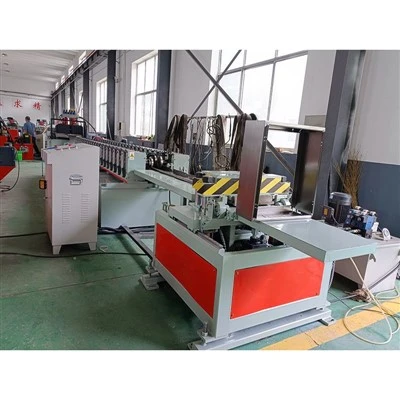
First off, stop treating “safety” like a sticker you slap on a machine. For us, every piece of safe manufacturing equipment we build doesn’t just have a guardrail—it’s designed with the operator in mind. But that’s half the battle. The other half is making sure your team doesn’t disable those safeguards because they’re a “hassle” or “slowing down production.” Wait, let’s be real—when a machine’s guard blocks a reach that would’ve taken 2 seconds, and an operator’s in a rush to hit a quota, that guard might come off. That’s a problem. So step one: train your crew on why the safeguards exist, not just what a button does. I’ve seen shops where a new hire disables a pressure sensor because they “didn’t see what it did”—turns out that sensor’s the exact thing that kept a 20lb metal stamping from crushing a finger last month. So training can’t be a 10-minute video on day one. It needs to be hands-on, role-specific, and refreshers every 6 months. Even for the veterans. I’ve got one client where a 15-year operator started skipping lockout-tagout (LOTO) steps because he “knew the machine inside and out”—turns out he forgot a valve was leaking, and when he tried to adjust a part, the machine cycled. LOTO isn’t just a rule—it’s a habit, and habits need work to stick.
Next, let’s talk about equipment-specific checks. We build our safe manufacturing equipment with real-time monitoring features, but most operators (and even some supervisors) don’t use them. Like, our CNC mills have a vibration sensor that alerts you if a part’s misaligned before it throws a chip, but a lot of crews ignore those alerts because they think “it’s just a warning.” But that alert’s also a safety signal—misaligned parts can cause kickback, which is how a guy chipped his tooth last year. So make those monitoring tools non-negotiable to check at shift start. Not just a glance—actually log the readings, because that creates accountability. Also, do pre-use checks for every operator, no exceptions. I know it adds 5 minutes to the start of a shift, but that 5 minutes can prevent a $100k machine repair and a 6-week worker comp claim. Last quarter, a client of ours had a spindle on a lathe seize up because a operator didn’t check the lubrication level—they skipped it to make up time, and the spindle threw a part into a nearby conveyor, which almost hit a intern. Small checks, big payoff.
Then there’s the personal side—operator fatigue and awareness. You might think that’s not related to the equipment, but trust me, it is. A tired operator is a careless operator, and even the best safe manufacturing equipment won’t stop a mistake if someone’s zoning out because they pulled a double shift. We’ve had clients who added rotating tasks every 2 hours—like having an operator do a light assembly task instead of a heavy stamping run for 30 minutes—to keep them sharp. That’s a game-changer. Also, clear the work zone. A lot of shops have scrap piles, toolboxes, and half-finished parts stacked right next to machines—those are trip hazards, but they’re also distractions. If an operator’s reaching over a pile of metal offcuts to grab a tool, their focus is split, and that’s when accidents happen. We recommend marking 3-foot clear zones around every piece of equipment—no storage, no tools, just the operator and what they need. I’ve seen shops where that simple change reduced near-misses by 40% in 3 months. Don’t believe me? Ask any foreman who’s dealt with a broken ankle from tripping over a stray part while rushing to hit a deadline.
Wait, let’s not forget maintenance. Our safe manufacturing equipment is built to be low-maintenance, but that doesn’t mean you can ignore it. Skipping maintenance isn’t just about keeping the machine running—it’s about keeping the safety features working. For example, our guard interlocks (the ones that shut the machine off if you open the guard) need to be tested every week. If a interlock’s loose and doesn’t trigger when the guard opens, that’s a death trap. We have a maintenance checklist that we give every client, and I can’t tell you how many times a shop found a broken interlock during a routine test that would’ve caused a serious injury within a week. Also, use genuine replacement parts. I know generic parts are cheaper, but a generic sensor might not trigger at the right pressure, which is the exact thing that keeps the machine safe. Last year, a client used a generic limit switch on a saw—when the switch failed, the blade didn’t retract when the guard opened, and an operator lost a fingertip. That could’ve been avoided with a $20 genuine part. Don’t cut corners here.
Another big one: reporting near-misses. This is something a lot of teams hate—they see a near-miss as a “close call” and move on, but that’s gold. When an operator says, “I almost got hit by a flying part because the feed rate was off,” that’s not a complaint—it’s a safety tip that prevents a serious accident. We encourage all our clients to set up a no-blame reporting system—no reprimands for reporting a near-miss, just a team huddle to fix the issue. One of our clients started giving out small gift cards (Starbucks, $20) for every near-miss reported, and within 6 months, they had 10x more reports, and their accident rate dropped by 70%. Why? Because operators feel safe speaking up, not scared of getting in trouble. If someone’s scared to say “my machine’s guard is broken,” that’s a time bomb.
Let’s also touch on adapting to different operators. Not every crew member is the same. A 20-year veteran might know the machine, but they might be set in their ways and skip steps. A new hire might be nervous, but they’ll follow the rules to a T. We’ve had clients pair veterans with new hires as “safety buddies”—the veteran teaches the new guy how the machine works, and the new guy makes sure the veteran doesn’t skip lockout-tagout steps. That’s a win-win. Also, consider accessibility—if an operator has a disability, make sure the equipment is adjusted for them. Our safe manufacturing equipment has adjustable control panels, hand cranks, and foot pedals, but if you don’t adjust them, that operator might have to stretch, which is a distraction. I worked with a shop where a operator with bad knees had to stand on a stool to reach a control button—they changed the height, and their near-misses went from 2 a month to zero. Small adjustments, big impact.
Wait, let’s address the “production vs. safety” myth. A lot of shop managers think safety slows down output, but I’ve seen the opposite. When you have a safe, trained team, downtime drops because there’s no accidents, no machine damage, no worker comp claims. One of our clients was worried that adding lockout-tagout steps would cut production by 10%—actually, it cut downtime by 15% because there were no unplanned stops from accidents. Safety isn’t a cost—it’s an investment. And our safe manufacturing equipment is built to balance both: we don’t make safeguards that make the machine run slower, we make safeguards that work with the machine to keep you efficient.
Now, let’s get real about gaps. Even the best systems aren’t perfect. Maybe an operator gets in a hurry, maybe a part breaks, maybe a sensor glitches. So add a final layer: visual safety aids. We put big, bright, easy-to-read labels on all our machines—no tiny fine print, just “LOCK BEFORE ADJUSTING,” “GUARD CLOSED TO START,” in bold, high-contrast text. Operators glance at those every time they start a machine, and that reminder is often the thing that makes them stop and do the right thing. I’ve also seen shops add a “stop work” button every 10 feet around the floor—no questions asked, if someone feels unsafe, they hit the button. That single rule has stopped so many accidents because an operator doesn’t have to risk their safety to keep production going.

At the end of the day, ensuring operator safety with safe manufacturing equipment isn’t about one thing—it’s a cycle: train, check, adapt, report, maintain. It’s not a one-time setup, it’s a daily habit. If you’re using our gear, we don’t just sell you a machine and disappear—we give you the tools, check-ins, and support to make sure your crew is safe. If you’re tired of near-misses, worried about compliance, or just want to keep your team (and your business) running strong, reach out to us to talk through your shop’s specific needs. We’ll work with you to build a safety plan that fits your equipment, your crew, and your production goals. No generic advice, no sales pitch—just real solutions for real shop floors.
Door Panel Production Line References
OSHA. (2023). Lockout/Tagout (LOTO) Safety Standard for Manufacturing. Occupational Safety and Health Administration.
National Institute for Occupational Safety and Health (NIOSH). (2022). Safe Equipment Design Principles for Operator Protection. Centers for Disease Control and Prevention.
Manufacturing Extension Partnership (MEP). (2023). Reducing Workplace Accidents Through Pre-Use Equipment Checks. U.S. Department of Commerce.
American National Standards Institute (ANSI). (2021). Safety Requirements for Industrial Manufacturing Machinery. ANSI B11 Series.
Weifang Yue Jun Machinery Co., Ltd.
With abundant experience, we are one of the most professional safe manufacturing equipment manufacturers in China. We warmly welcome you to buy durable safe manufacturing equipment made in China here from our factory. We also accept customized orders.
Address: Kuiwen District, Weifang City, Shandong Province
E-mail: adrian@yuejunmachinery.com
WebSite: https://www.yuejunmachinery.com/
