What’s up everyone, and thanks for stopping by! If you’re here, you’re probably either in the market for W-beam guardrails for a project, or just weirdly curious about why those metal road barriers don’t rust through after sitting out in rain, snow, and salty road spray for decades. As a W-beam guardrail supplier who’s been deep in this game for 8 years, I get asked all the time: “What actually keeps those bars from turning into a pile of orange gunk?” So today, I’m breaking down the actual anti-corrosion treatments we (and most reputable manufacturers) use—not the cheap, stuff that falls apart in 5 years. Let’s dive in. W-Beam Guardrails
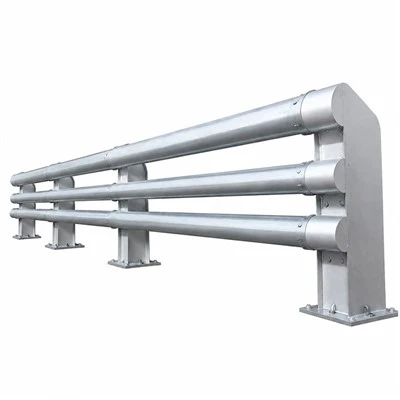
First, let’s do a quick refresher for anyone who’s new: W-beam guardrails are made from hot-rolled carbon steel, right? Steel’s basically iron with a dash of carbon, and iron + oxygen + water (or saltwater) equals rust. That’s the chemical reaction we’re fighting 24/7. The worst culprit? Road salt. In places that get snow, they dump tons of sodium chloride, magnesium chloride, or calcium chloride on roads every winter—those salts don’t just melt ice, they eat through way more metal than plain rain. So anti-corrosion treatments aren’t just a “nice to have”—they’re what keeps guardrails safe for drivers, because a rusted guardrail can bend or snap way easier in a crash.
Now, let’s talk about the treatments, starting with the most common and reliable one: hot-dip galvanizing. This is the bread and butter of W-beam guardrails, and for good reason. Here’s how it works, no fancy chemistry degree needed: after the W-beam is formed into its classic shape, it gets cleaned super thoroughly—we’re talking acid baths to strip off mill scale, oil, and any other gunk from the steel mill. Then, it’s dipped into a bath of molten zinc (think: super hot, melted zinc metal, around 840°F or so) for a few minutes. The zinc chemically bonds to the steel, not just sits on top— that’s key.
Wait, why zinc? Two big reasons. First, it acts as a barrier, like a raincoat for the steel. If a chip or scratch happens (which they do, from construction damage, road debris, whatever), the zinc is still there. Second, and this is the cool part, zinc is sacrificial. If the steel gets exposed, the zinc will corrode first, not the steel. It’s like the zinc is taking the bullet for the guardrail. We test this all the time—scratch a galvanized W-beam and leave it out, and only the scratch spot turns a tiny bit of gray, no big rust spot. If it wasn’t sacrificial, that scratch would turn orange in months.
Now, how long does hot-dip galvanizing last? For normal road conditions, we’re talking 30 to 50 years. In high-salt areas, like coastal roads or northern states with heavy road salt use, it’s a little less—20 to 30 years, which is still way better than any other common treatment. I’ve seen galvanized guardrails on a highway in upstate New York that are 40 years old, and they barely have any rust. That’s the stuff we stand behind.
But wait, there’s a newer treatment that’s gaining traction, especially for projects in super harsh environments, like coastal highways or mountain roads with tons of road salt: zinc-aluminum-magnesium (ZAM) coating. I know, it sounds like a sci-fi alloy, but it’s basically a mix of zinc, aluminum, and a tiny bit of magnesium, applied similarly to hot-dip galvanizing—dipping the steel into a molten bath, so it bonds chemically. What makes ZAM better? It’s way more corrosion-resistant than regular hot-dip galvanizing. In salt spray tests (the standard way to test anti-corrosion stuff), ZAM lasts 2 to 3 times longer than regular zinc. We’ve had clients in Florida (super humid, salty air) switch to ZAM, and they haven’t had to replace guardrails as often. The downside? It’s a little more expensive, but for high-risk areas, it’s worth every penny.
Now, you might be thinking, “Wait, I’ve seen guardrails that are painted too! Is painting a treatment?” Yeah, it is—but it’s almost never the primary anti-corrosion layer. Painting works as a topcoat, not a standalone treatment. The only time you’ll see just painted guardrails is on super low-traffic roads, or cheap, low-quality imports. Why? Because paint is a thin layer that chips, and once it chips, rust starts under the paint and bubbles it up from the inside, which is way harder to fix. We always put a paint topcoat over galvanized or ZAM for aesthetic purposes, like on residential streets or downtown areas where the gray galvanized steel looks out of place. The paint adds maybe 5 years of extra life, but only if it’s applied right—no cutting corners on paint quality.
Wait, let’s talk about the bad stuff you should watch out for, too. A lot of cheap suppliers cut corners on the cleaning step before galvanizing. If you don’t get all the mill scale and oil off the steel, the zinc won’t bond properly. So you’ll get spots where the zinc flakes off, and rust starts right there. I’ve seen this on guardrails from overseas that were super cheap—they rusted through in 3 years. Also, some suppliers use “cold galvanizing” instead of hot-dip. Cold galvanizing is just a zinc paint you brush or spray on, way cheaper, but it doesn’t chemically bond. It’ll scratch off way easier, and only lasts 5 to 10 years. Never go with cold galvanizing for major projects—your team will be back replacing guardrails way sooner than you planned.
Another thing: post-treatment. Once the galvanizing or ZAM is done, some manufacturers add a sealant or passivation layer to help it last even longer. Passivation is just a chemical bath that coats the zinc layer, slowing down the corrosion process if the zinc gets scratched. It’s not mandatory, but it’s a nice touch for areas that are really hard on metal. We add passivation to all our guardrails that go to areas with high humidity or salt spray, and our clients love the extra peace of mind.
Let me put this in perspective with a real example. Last year, we did a project for a state DOT in Oregon, which has a lot of coastal roads and rainy weather. They were replacing old guardrails that had rusted through in 12 years—turns out the old supplier used cold galvanizing and cut corners on cleaning. We supplied them with our standard hot-dip galvanized W-beams with a passivation layer, and they also opted for the ZAM coating on the coastal stretch. The DOT engineer told us they expect the ZAM ones to last 40 years, and the regular galvanized ones around 30. That’s way better than the 12 years they were used to.
Now, I know a lot of you are probably here for projects, so let’s talk about what to ask your supplier. If you’re getting quotes for W-beam guardrails, don’t just look at the price. Ask three questions: 1) Is this hot-dip galvanized, or cold? 2) What’s the thickness of the zinc coating? (A good hot-dip galvanized W-beam has a zinc layer of at least 2.7 ounces per square foot, usually more for high-salt areas. If they don’t have that number, walk away.) 3) Do you add any extra treatments, like passivation or ZAM? If a supplier can’t answer those, or gives you a price that’s way lower than everyone else’s, they’re cutting corners.
As your go-to W-beam guardrail supplier, we test every single batch of our guardrails in-house. We do salt spray tests, pull tests, zinc thickness checks—no shipping out stuff that doesn’t meet the AASHTO standards (that’s the federal standard for road hardware in the US, by the way). We also offer custom coatings, like colored paint, for projects where looks matter as much as durability.
At the end of the day, anti-corrosion treatments for W-beam guardrails aren’t one-size-fits-all. A rural road in Iowa can get away with standard hot-dip galvanizing, but a coastal highway in Texas needs ZAM, and a downtown side street might just need galvanized with a paint topcoat. The key is knowing what your project needs, and working with a supplier who can tell you the difference, not just sell you the cheapest stuff.
If you’re working on a project right now—whether it’s a small residential road, a big highway, or a new subdivision—and you want to talk about which anti-corrosion treatment makes sense for your needs, hit us up. We don’t do pushy sales talks, just straight answers about what works, what doesn’t, and what fits your budget. No hidden fees, no cheap cuts, just guardrails that last.
W-Beam Guardrails References:
- “AASHTO M185: Standard Specification for Steel Sheet, Zinc-Coated (Galvanized) or Zinc-Alloy-Coated for Sheet Steel Used in the Manufacture of Guardrails and Bridge Railings”, American Association of State Highway and Transportation Officials.
- “Corrosion Resistance of Zinc-Aluminum-Magnesium Coatings for Steel Guardrails”, Transportation Research Record, 2021.
- “Hot-Dip Galvanizing for Steel Highway Components”, International Zinc Association, 2020.
- “Effect of Road Salt on Corrosion of Steel Guardrails in Northern Climate Zones”, Journal of Materials in Civil Engineering, 2018.
Guanxian Hongrong Traffic Facilities Co., Ltd.
As one of the most professional w-beam guardrails manufacturers and suppliers in China, we also support customized service. Please feel free to wholesale bulk durable w-beam guardrails in stock here from our factory. Welcome to contact us for quotation.
Address: South side of the road, 100 meters west of the intersection of Baiyang Road and Donghuan Road, Chongwen Subdistrict, Guan County, Liaocheng City, Shandong Province
E-mail: hongrongli568@163.com
WebSite: https://www.hongrongguardrail.com/
